Harrison Clarke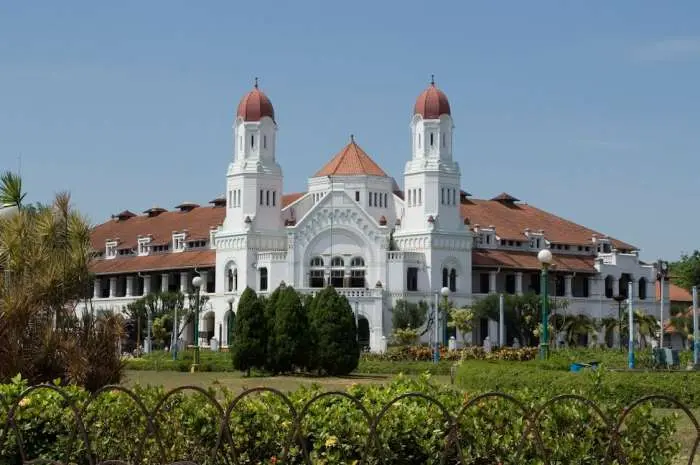
Lawang Sewu Semarang is a historical landmark that offers magnificent architecture, mystical stories, and various interesting facilities for tourists.
Lawang Sewu, a historical building located in the center of Semarang City, Central Java, is one of the important icons that holds a long story about the journey of Indonesian history, especially the Dutch colonial period.
Known as “a thousand doors”, although the number of doors and windows is actually only around 928, Lawang Sewu has been a silent witness to various historical events that shaped the city of Semarang, including the Japanese occupation and the struggle for Indonesian independence.
In addition to its historical appeal, Lawang Sewu also offers the beauty of stunning colonial architecture, making it an interesting place to visit for tourists from all over the world.
Here is some information about the history, attractions, and facilities at Lawang Sewu, which make it a tourist destination not to be missed.
History of Lawang Sewu
Lawang Sewu was built in the early 20th century by the Dutch colonial government, precisely from 1904 to 1907, as the headquarters of the Dutch East Indies railway company, Nederlands-Indische Spoorweg Maatschappij (NIS).
This building was designed by a Dutch architect, Prof. Jacob F. Klinkhamer, with a concept that carries a distinctive European architectural style.
At that time, Lawang Sewu functioned as an administrative and operational center for the railway transportation system that was the backbone of the Dutch East Indies economy.
Over time, Lawang Sewu witnessed various important events, including when Japan occupied Indonesia and made it a place of torture for freedom fighters.
Even though it has changed function, this building remains an important historical symbol and is now one of the main tourist destinations in Semarang.
The Attraction of Lawang Sewu Tourism
Lawang Sewu offers a variety of attractions that make it so special and a very popular tourist destination, not only for history lovers but also for architecture and photography enthusiasts.
1. A Thousand Doors
The name Lawang Sewu, which in Javanese means “a thousand doors”, refers to the enormous number of doors and windows in the building.
With three main buildings structured in the shape of the letter “U”, Lawang Sewu presents a very distinctive appearance, especially on the front which is filled with large doors and windows.
Although there are only 928 of them, the many doors and windows make the building look as if it has no end. This uniqueness also serves to facilitate air circulation inside the building, considering the tropical climate in Indonesia.
This building attracts the attention of many tourists, either just to take pictures or to enjoy the beauty of the existing architectural structure.
2. Uniqueness of Architecture
Lawang Sewu’s architecture is very distinctive with a Dutch colonial feel.
The main uniqueness of this building is the use of unusual building materials at that time, namely bligor (a mixture of sand, lime and red brick) which makes this building remain sturdy without cracks until now.
The use of bligor aims to keep the temperature inside the building cool, which is very suitable for Indonesia’s tropical weather.
In addition, the roof of this building is built with a semicircular curved design that aims to reduce pressure on the building structure.
Uniquely, this building does not use iron in its construction, except for the last building built in 1916, due to difficulties in shipping materials from Europe due to World War I.
At the top, you will find a roof structure that uses bricks, which form a sloping pattern similar to the structure of a bridge.
3. Historical Diorama
Lawang Sewu also has two main buildings that are used as diorama rooms containing various historical objects.
Visitors can see the museum collection that displays equipment and knick-knacks from the past, including maps, photographs, and various documents that tell the history of railways in Indonesia.
This diorama not only tells the history of railway construction, but also depicts Semarang as the largest trading center in Indonesia at that time.
Most of the diorama collection is located on the first floor, while the second floor is used as the office of the Heritage and Architecture Division of PT KAI which is still active today.
Visitors who are interested in the history of Indonesian transportation will find a very interesting experience here.
4. Mosaic Glass
One of the interesting features at Lawang Sewu is the 9-meter high mosaic glass located inside the main building.
This mosaic stained glass is divided into four large panels and depicts the exploitation of Indonesia’s nature during the colonial period.
These panels feature the Goddess Fortuna, Goddess Sri, and various symbols related to the natural wealth of the archipelago such as plants, animals, and large trading cities such as Batavia, Surabaya, and Semarang.
This stained glass not only functions as a decorative element but also becomes a symbol of prosperity resulting from the exploitation of Indonesia’s nature during the Dutch colonial period.
The beauty and intricacy of this mosaic glass design makes it a favorite spot for visitors to take photos.
5. Basement
Lawang Sewu also has a basement which is a special attraction for tourists who want to experience a more mystical atmosphere. This basement was once used as a prison by the Japanese army during the colonial period.
The architectural intelligence of this building is also reflected in the function of the basement which was originally intended for drainage or water channels.
The damp, low-ceilinged and dark atmosphere of the basement adds a mysterious impression which further strengthens the mystical aura of this place.
Some visitors even report mystical experiences while in this room, which makes it an interesting location for visitors who want to experience a different sensation.
Location and Access & Entrance Ticket Prices
Lawang Sewu is located in the center of Semarang City, precisely at Simpang Lima, which makes it easy for visitors to reach it.
As one of the city’s landmarks, this location is very strategic and close to various other tourist attractions, such as Semarang Old Town and Blenduk Church.
To reach Lawang Sewu, visitors can use public or private transportation, and it doesn’t take long from the city center. Its easy access makes Lawang Sewu the perfect starting point to explore various interesting tourist destinations in Semarang.
To visit Lawang Sewu, visitors are charged a fairly affordable entrance ticket, around IDR 20,000 per person. This price gives tourists access to explore the uniqueness of the buildings, historical dioramas, and enjoy the various facilities in this area.
With affordable ticket prices, Lawang Sewu is an ideal tourist choice for anyone who wants to experience a fascinating historical experience.
Lawang Sewu in Semarang is a tourist destination that combines the beauty of colonial architecture, long history, and a unique mystical atmosphere.
From its signature thousand doors to its mysterious underground chambers, Lawang Sewu offers an experience that not only enriches historical knowledge but also provides an opportunity to enjoy the beauty of the magnificent building.
With adequate facilities and affordable ticket prices, Lawang Sewu and Old Town is the perfect place to visit for tourists who want to experience the atmosphere of the city of Semarang which is full of stories.