Harrison Clarke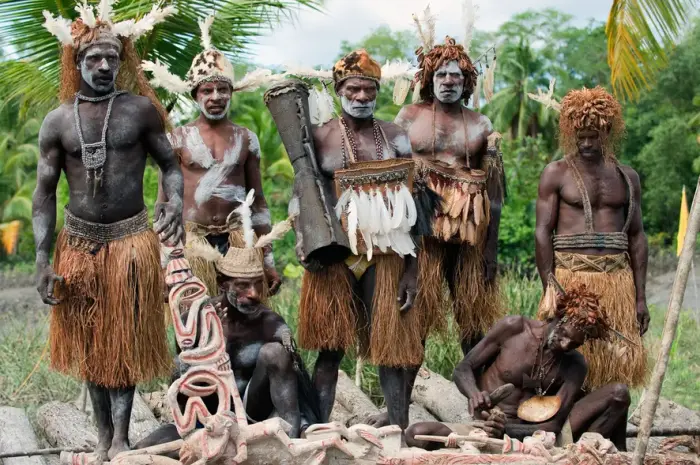
Explore the unique cultures of the Asmat Tribe that reflect the values of life through carvings, traditional rituals, and ancestral traditions that are full of meaning.
The Asmat tribe who inhabit the Papua region, Indonesia, have very rich and unique traditions and culture. Known for their extraordinary crafts and deep belief systems, this tribe has attracted worldwide attention.
Their culture includes not only aspects of art, but also a way of life that is closely related to nature and their social life.
Here are ten Asmat tribal cultures that have become world-famous, each depicting the values of life and local wisdom that are still alive today.
1. Tibe Dance
Tibe Dance is a typical Asmat war dance which was originally used to encourage soldiers before going to war. This dance is performed by a group of male dancers, consisting of 16 people with two female dancers as accompaniments.
The fast and energetic dance movements are accompanied by distinctive tifa music, which adds to the energetic impression.
The clothes worn by the dancers consist of beads on the chest, skirts made of sea roots, and leaf decorations tucked into their bodies.
As time goes by, Tibe dance is no longer only used for war purposes, but also to welcome guests and as a form of appreciation for visitors who come to their village. This dance is a symbol of spirit and unity for the Asmat people.
2. Jewish Traditional House
The traditional house of the Asmat Tribe, called “Jew”, has a very deep meaning for its people. In the Asmat language, Jew means “spirit” which awakens the human spirit to form a community and unite in social life.
Jew houses are often also called bachelor houses because the majority of their residents are bachelors or young men who are not yet married. This house was built with great care and following strict customary rules.
For example, the house must face the sunrise and be equipped with sacred objects that have spiritual meaning for the tribe.
The walls and roof of this house are made of nipah and sago leaves, while the foundation uses strong ironwood.
The process of building this house is very dependent on the power of nature and does not use iron nails at all, but relies on ropes and rattan roots to connect the wood materials.
3. Carving Tradition
The Asmat tribe is known as very skilled carvers, with their work being famous abroad. This carving is believed to be a legacy from the god Fumeripitsy who came down to earth and taught the art of carving to humans.
The carvings produced by the Asmat tribe often depict nature, animals and their daily life. One of the most famous carvings is the decorative wall panel which is often purchased by tourists as a souvenir.
In addition to the panels, there are also Bis (ancestor) Statues and Totems carved from whole tree trunks. The carving process is very precise and is done with traditional tools in the form of wooden hammers with metal tips.
Although this skill was once only passed down through generations of carvers, now many Asmat men are studying this carving art as a livelihood.
4. Death Ritual
The death rituals of the Asmat Tribe are very unique and reflect their views on life and death. They believe that death does not only occur due to old age, but also due to evil spirits or magic.
If a newborn baby dies, the community does not grieve too much, because they believe that the baby’s spirit will soon return to the spirit world.
When someone is sick, they will be fenced with nipah tree branches to prevent evil spirits from approaching them.
After someone dies, their body will be placed outside the village to decompose naturally, and their bones are then stored on a tree as a tribute. The skull can even be used as a pillow by the closest family, as a sign of love and respect.
5. Tsyimbu Ceremony
The Tsyimbu ceremony is an important ceremony for the Asmat tribe which is carried out for the making and inauguration of mortar boats.
This boat is made from a single ketapang or bintanggur tree trunk that is carved into a traditional boat shape used by the Asmat people.
Every five years, when the boat is finished, the Tsyimbu ceremony is held to inaugurate the boat. The boat will be painted red and white, and decorated with carvings and ornaments depicting ancestors or deceased family members.
After the boat is finished being decorated, the rowers will wear decorations made of paint and bird feathers, and the boat will be used for various purposes, including traditional ceremonies and important journeys in the life of the tribe.
6. Finger Cutting Ceremony
Another unique tradition in the Asmat Tribe is the finger-cutting ceremony, which is carried out as a form of respect for the deceased.
This ceremony is carried out by the closest family or relatives who feel the loss, where they will cut off part of their finger as a sign of grief.
Although this practice is now very rare, the finger-cutting ceremony is part of the Asmat Tribe’s way of honoring the deceased and to show how deep the sense of loss they feel.
7. Farming and Hunting
As a society that lives depending on nature, the Asmat tribe is very dependent on farming and hunting to meet their living needs.
They grow various types of food crops such as sago, bananas, and cassava which are staple foods. Apart from farming, they also hunt animals such as wild boar and kangaroos as a source of protein.
This hunting activity is often carried out using traditional tools such as spears and bows. The Asmat people greatly appreciate nature and preserve it by not taking more than they need.
8. Respect for Ancestors
Respect for ancestors is very important in the life of the Asmat tribe. They believe that the spirits of their ancestors remain present around them and provide protection.
Therefore, many traditional ceremonies are held to honor ancestors, such as offering food and jewelry, and making statues to commemorate them.
One way they honor their ancestors is by carving statues that represent the spirits of their ancestors, which are then displayed in traditional houses or sacred places.
9. Traditional Music
Traditional music of the Asmat tribe is an integral part of their lives, both in traditional ceremonies and as part of daily entertainment.
Tifa, a percussion instrument made of wood, is the main instrument in various traditional events, including dances and religious ceremonies.
Tifa produces a distinctive sound and is used to accompany war dances or to motivate soldiers. This traditional music is also used in ceremonies and rituals that involve honoring ancestral spirits and nature.
10. Traditional Clothing
The traditional clothing of the Asmat tribe is closely related to their natural surroundings. They wear clothing made from natural materials, such as tree bark, leaves, and plant roots.
This clothing is used in various traditional ceremonies, and each element of the clothing has a symbolic meaning related to one’s social status, age, and role in society.
Men often wear headdresses made of bird feathers, as well as beads and carvings that indicate their position in society.
With so much rich and profound culture, the Prainjing Traditional Village continues to preserve their traditions, even as times change.
They preserve and celebrate their cultural heritage with pride, and involve the younger generation in maintaining this world-famous culture.